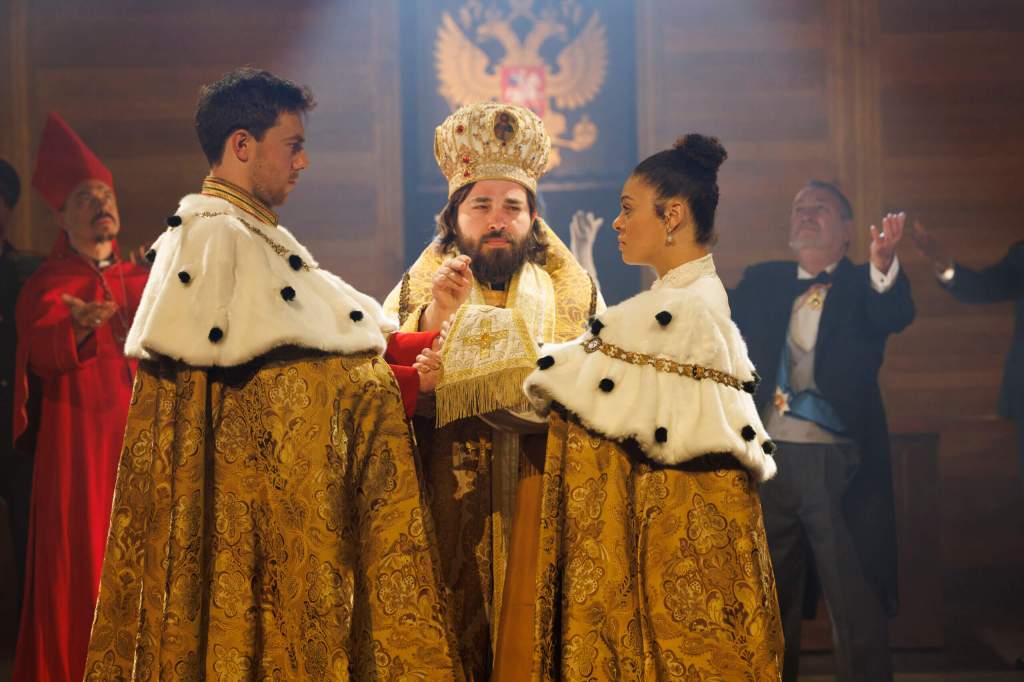
Before Anastasia, there was Dmitry. The royal imposter who led an army of Poles and Cossacks to take the crown and become tsar of Russia. But why this play now? Schiller’s play on Russian history is largely lost to history and rarely performed. Why bring it back now?

Is it satisfying to watch the invasion of Russia on stage in light of Russia’s own recent invasions of Belarus and Ukraine? Is it poetic justice to see an autocratic leader like Boris Godunov taken down by a populist movement with an autocrat in the Kremlin in 2022? Or maybe while we watch world events unfold we feel we need to collectively question who is in power and why we revere them.
Dmitry is a story that stands on its own. Though normally relegated to the footnotes of history as the succession battle that bridges the long imperial rules of the Ivans and the Romanovs. Or, Dmitry is often presented as the subplot in Mussgorvsky’s operatic masterpiece, Boris Godunov.
Dmitry is classroom history on stage done well, albeit a bit too stuck to words on the page. With the basics of Russian history and Ivan the Terrible, the show is enjoyable. Without prior knowledge, the show may feel like watching a work of Shakespeare you know nothing about. Some names, symbols, and themes of both Russian history and orthodoxy aren’t always fully explained. Though, the political drama is salient enough to hold attention.
The acting, though, is not convincing. It’s a show built on a lie— Dmitry is not the son of Ivan the Terrible and is not the heir to the tsar. In Act One, the entire cast believes the lie too willingly. With acting that gives in so quickly, it’s difficult to establish motives for the show’s key characters.
Though set in Russia, the acting is very British. It’s Russia through British eyes.
In Polish Parliament, the Brits jeer & aye as if in Westminster. On the battlefield outside Novgorod, the Brits jump & chant as if watching football at the pub. While this makes for easy viewing, it makes it difficult to build a cultural landscape.
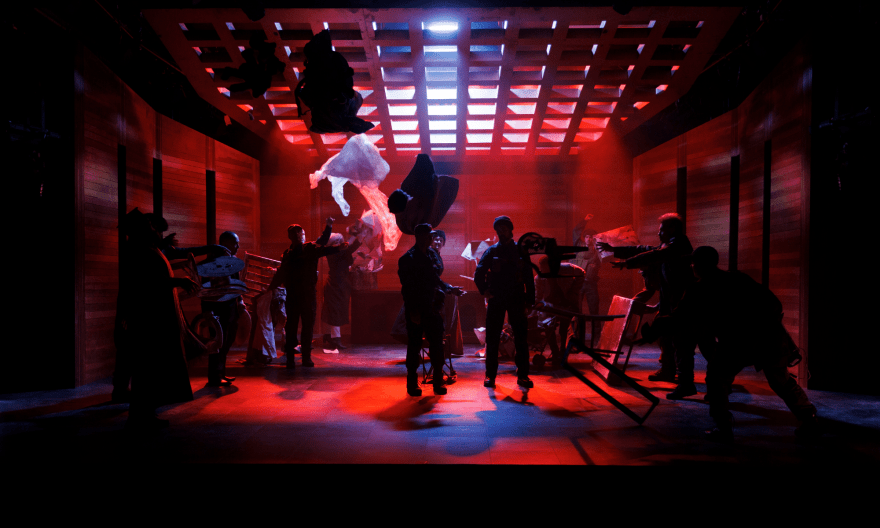
Tim Supple’s production is visually impactful. It’s an impressive set of clostraphobic exposed wood. The costuming is equally impressive. Robert Innes Hopkins’ use of modern suits and military suits modernises the political drama to Putin’s Kremlin, but the traditional robes and regalia of Russian orthodoxy anchor the visual world in tradition. The show has seemingly endless props, which are used as symbols throughout. Supple’s direction provides very clever use of space. The stage’s wooden box transforms from parliament chambers to an Orthodox Church to a particularly visual battlefiled.
It’s a striking, albeit curious choice, to open the new Marylebone Theatre. The space is modern with expressionist elements. Before the show, I browsed Russian history titles in the adjoined bookshop and found the cafe comfortable and inviting. The space is pleasant and promising. The question remains— for a beautiful new theatre, why open with this show?
Dmitry is worth seeing for its historical relevance and visual impact. But why now? Maybe we need a wider view of Russia, one that forces us to challenge a Russia manipulated and framed by its current leader. Schiller’s Dmitry is an old play that takes on new meaning in a time of ear with Russia. Perhaps the Dmitry prompts us to question—if the tsar is built on a lie, who truly believes that lie and who only pretends to believe that lie for their own political motives?
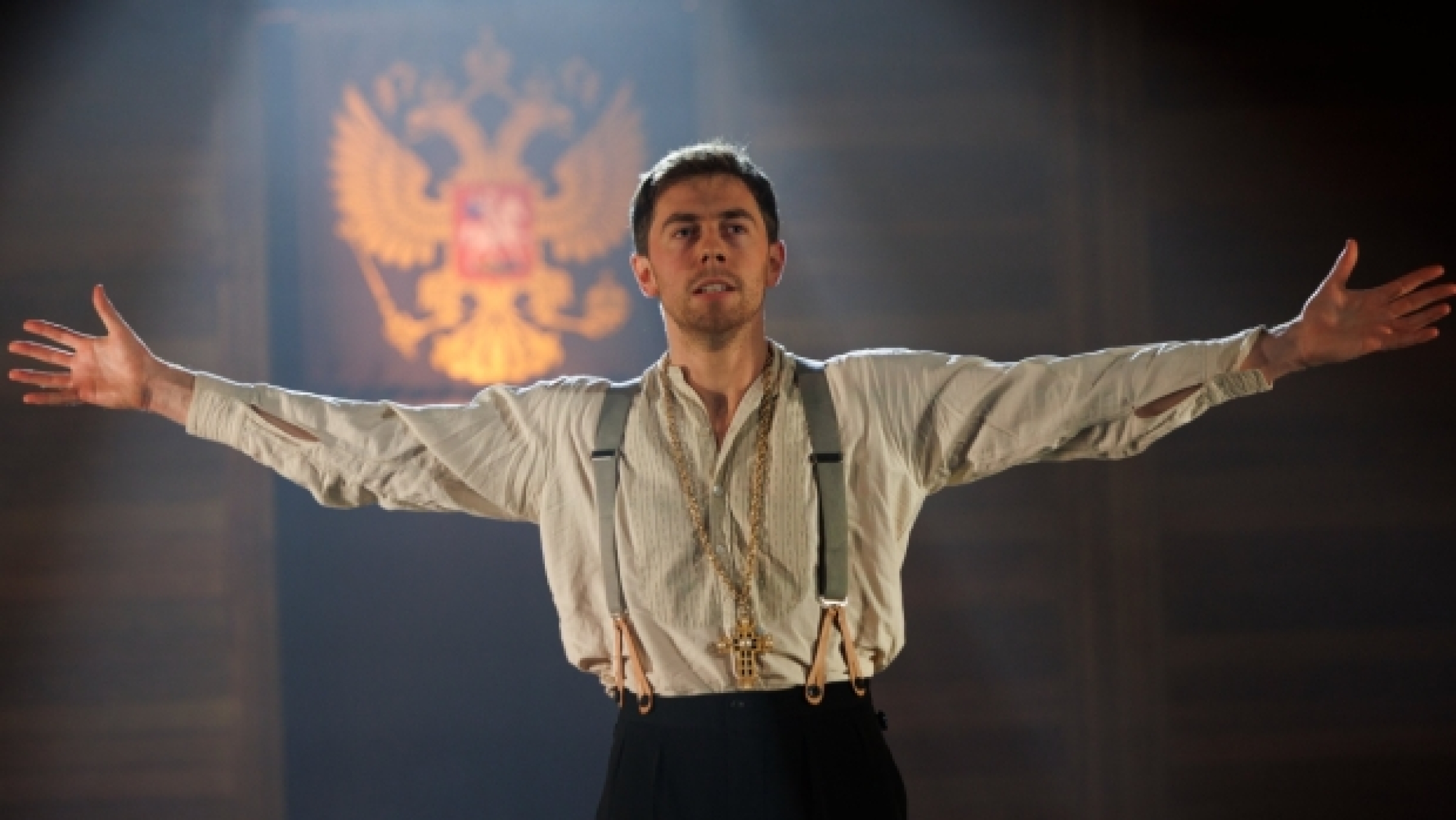
All photos from Marylebone Theatre promotional materials.
 London Show Cap
Leave a comment