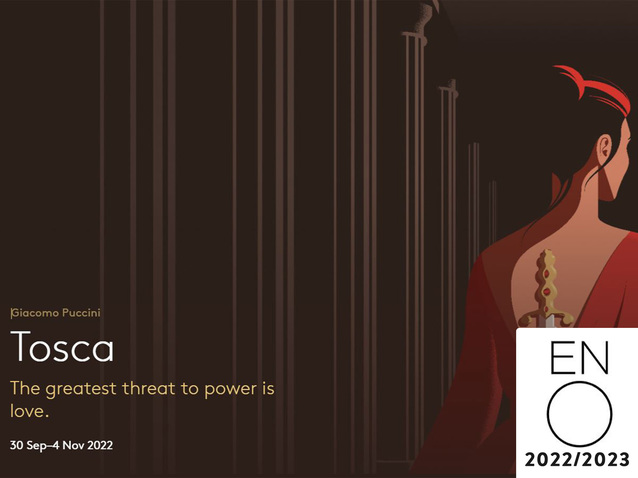
120 years after its premiere, is it possible for Puccini’s Tosca to feel fresh? In its English National Opera premiere, Cristof Loy’s Tosca is a classic with a few twists. There’s more than meets the eye with this Tosca.
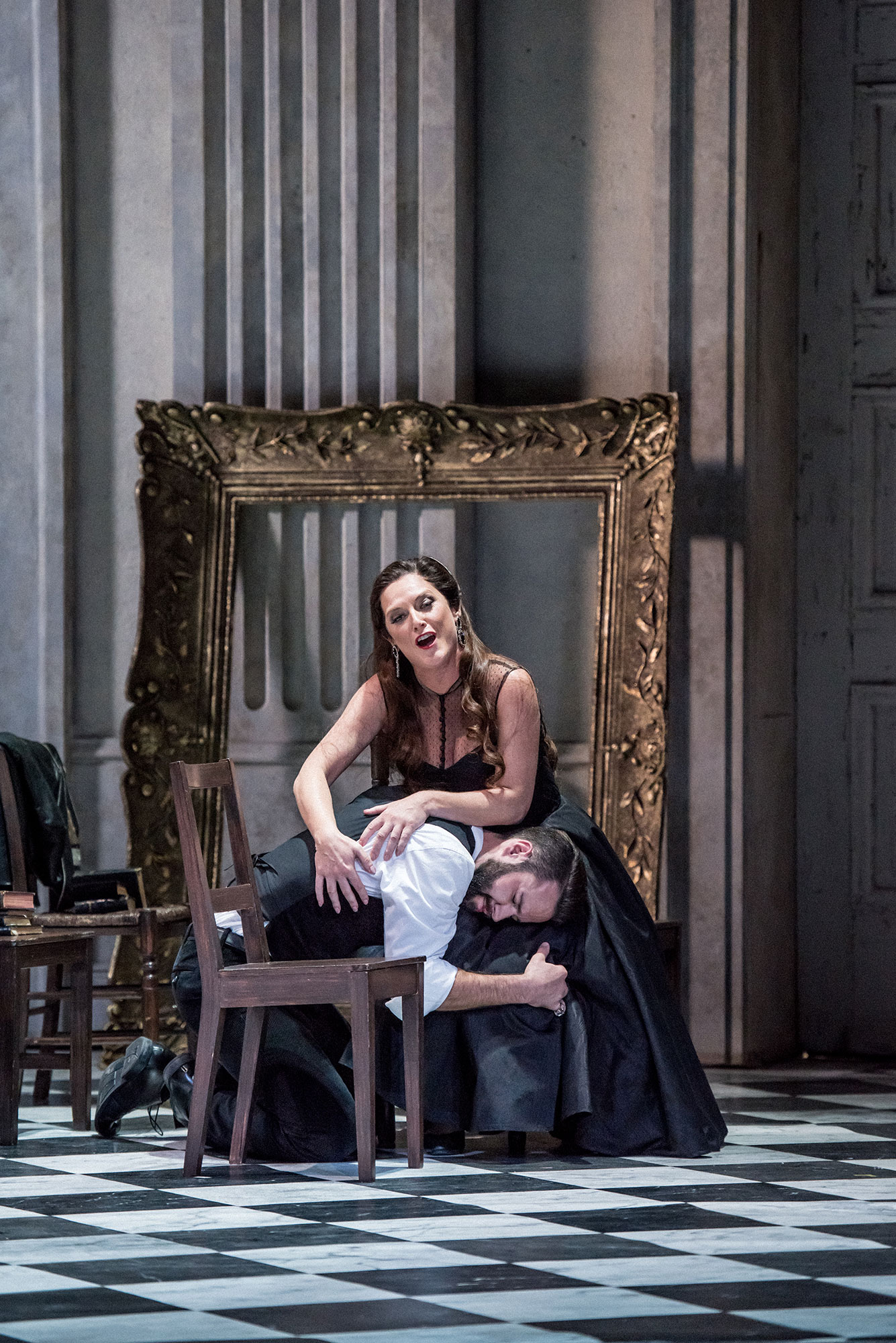
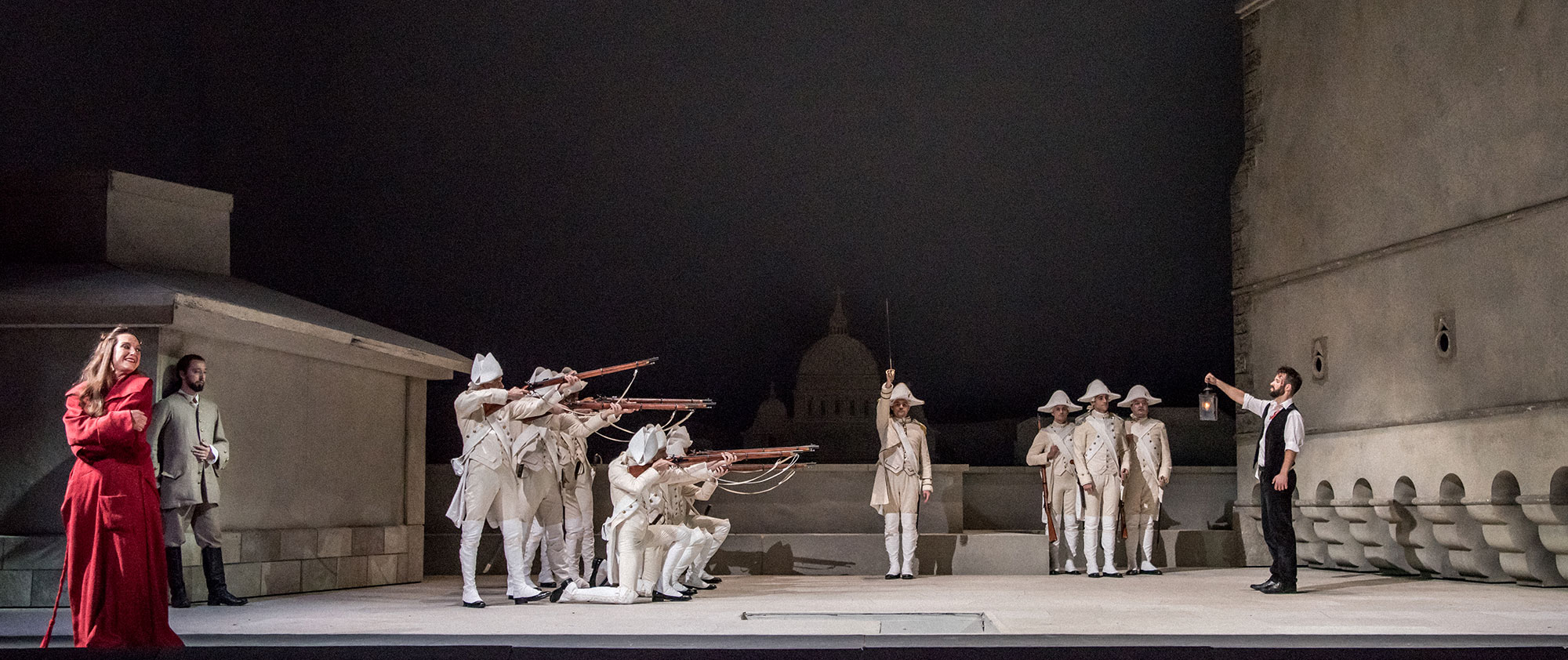
The curtain rises with bold fanfare that gives way to an instantly familiar church. This world is deceivingly familiar. “Traditional,” I write in my notebook. As characters enter, a collage of visual elements emerges. Some elements feel at home in the original libretto, set in 1800 Rome. Scarpia and his men are dressed in military coats of the era, while sculpted, powdered wigs call back to an earlier Baroque period. Tosca’s wardrobe fast forwards to the elegant silhouettes of the 19th century, while Cavaradossi and Angelotti wear suits that are modernised to near present-day. It’s a visual world that refuses to settle in one time. Borrowing Loy’s own description, I cross out “traditional” and write— “timeless.”
This staging presents violence plainly and forces its characters to react. Puccini’s famous verismo (realism) is there, but with less melodrama. The acting is emotive and revealing. Adam Smith’s Cavaradossi, Sinead Campbell-Wallace’s Tosca and Noel Bouley’s Scarpia are all deeply stirring. Scarpia’s use of force is unflinching and unforgiving; Cavaradossi’s bravery is bold and unwavering; and Tosca’s loyalty is gritty. By laying the characters’ feelings and motives bare, the performance feels human.
In this production, Tosca and Cavaradossi’s love story takes centre stage. The intensity of the plot is offset by convincingly tender moments. The lovers are presented with space to breath, softer lighting, and, as if in relief, exhaled posture. Singing out to the audience, Tosca and Cavaradossi sing their love and loyalty arrestingly. Amidst the violence, the love story glitters through.
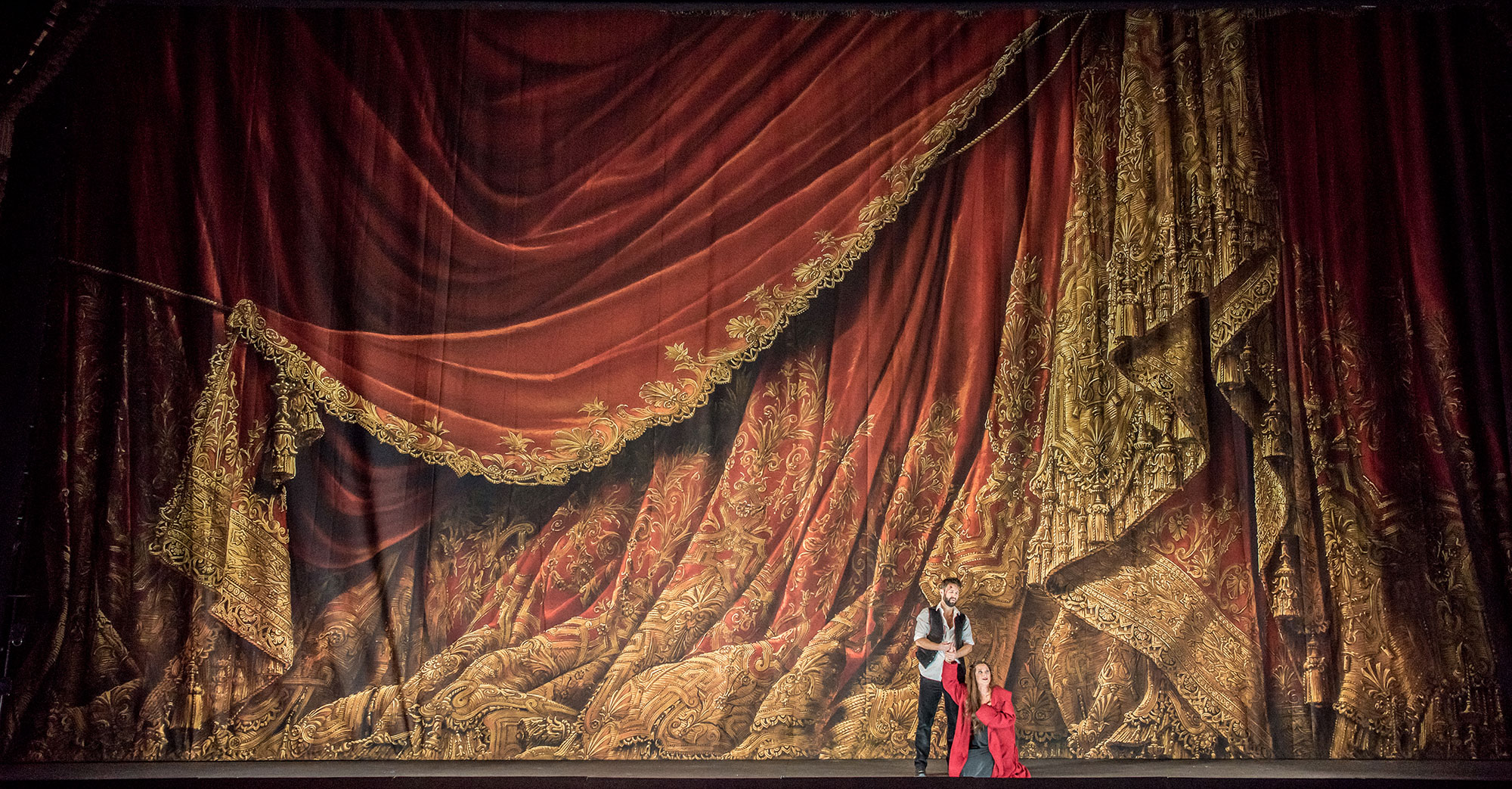
The night’s vocal performances are resonant and rich. Smith, Campbell-Wallace, and Roland Wood (singing Scarpia offstage on opening night) take every opportunity in Puccini’s score to showcase their upper registers.
An expressive orchestra and a formidable chorus underpin these strong vocals. The chorus provides an intensity of sound that reinforces the urgency of Tosca’s world. Conducted by Leo Hussain, the orchestra paints a soaring emotional world, presenting forceful renditions of Scarpia’s leitmotif, withdrawing in the arias, and swelling in the duets.
The biggest joy of the night is the young stars themselves. In many opera companies, Cavaradossi and Tosca are roles typically sung by veteran performers. The night’s young singers perform with a vitality and edge that is heightened by their youth. Smith’s tenor is particularly impressive. The resounding applause for Smith’s curtain call promises an exciting career for the tenor. Without compromising this beloved classic, ENO’s timeless Tosca is made fresh with its young stars.
All photos by Genevieve Girling as part of English National Opera Press Pack.
 London Show Cap
Leave a comment