
The London Symphony Orchestra has dusted off its music stands and shelved its well-worn repertoire for an exciting and thoroughly modern evening of UK premieres. Awaken the Sleeper: American Music for Our Times meets the moment.
The music is young. All four pieces were written in the past 5 years. All the composers are alive—one of whom, Carlos Simon, was sat a few seats over from me. And all the pieces and their composers are Black Americans with something to say about Black cultural heritage, America today, and Black Lives Matter.
The four pieces — Joel Thompson’s To Awaken the Sleeper (2020), Wynton Marsalis’ Tuba Concerto (2021), and Carlos Simon’s Portrait of a Queen (2017) and Amen! (2019)— create a dynamic and poignant commentary on the American dream (with all its flaws and opportunities) and assert Black America’s right to that dream.
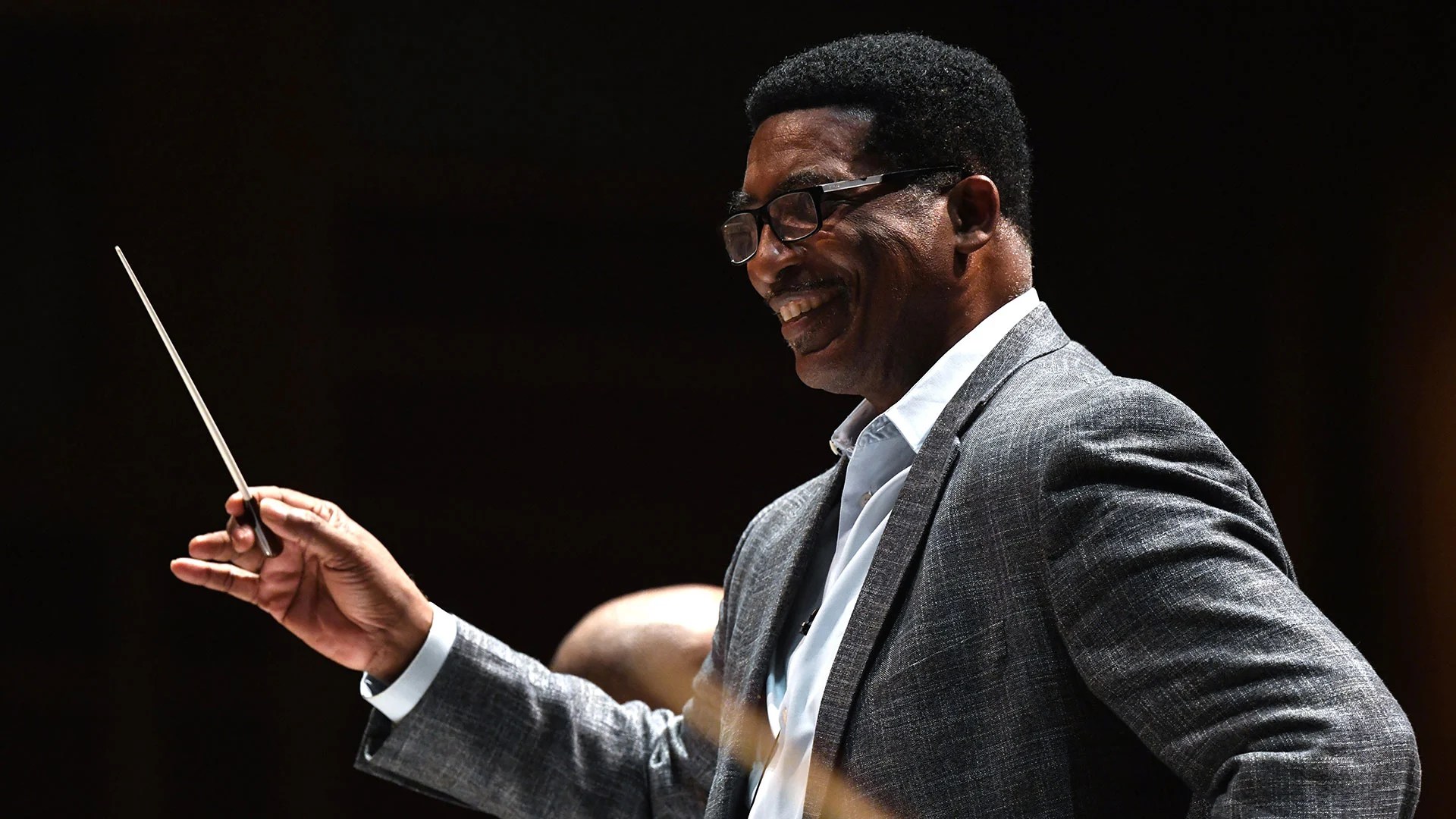
Joel Thompson’s To Awaken the Sleeper (2020)
Awaken the Sleeper brought me to tears. Joel Thompson always makes me feel something.
In To Awaken the Sleeper, Thompson writes weightless interludes in the orchestra’s upper range that evoke an unachieved hopefulness and a promised future. Embellishing with diminished sevenths, Thompson adds a dissonance that reinforces how special (and fleeting) this beautiful hopefulness is.
These shining moments are quickly swallowed by darker, mechanical, rattling that swirls and overtakes a hopeful future with the weight of reality. It’s structural and oppressive. These two counterpoints create an emotional depth that feels urgent.
You can tell Thompson writes for choir. The brass instruments sing as if voices in two, then three, then four-part harmonies
With Awaken the Sleeper, Thompson expertly creates allusions to America’s history through music— revolutionary snare drums and trumpets, a chromatic Star Spangled Banner. The patriotism and the promise are there, but it’s not harmonious.
It’s effective in its message. James Baldwin’s poem, narrated over the piece, punctuates this symphonic call to action.
America can be beautiful, if only we can awaken the sleeper.
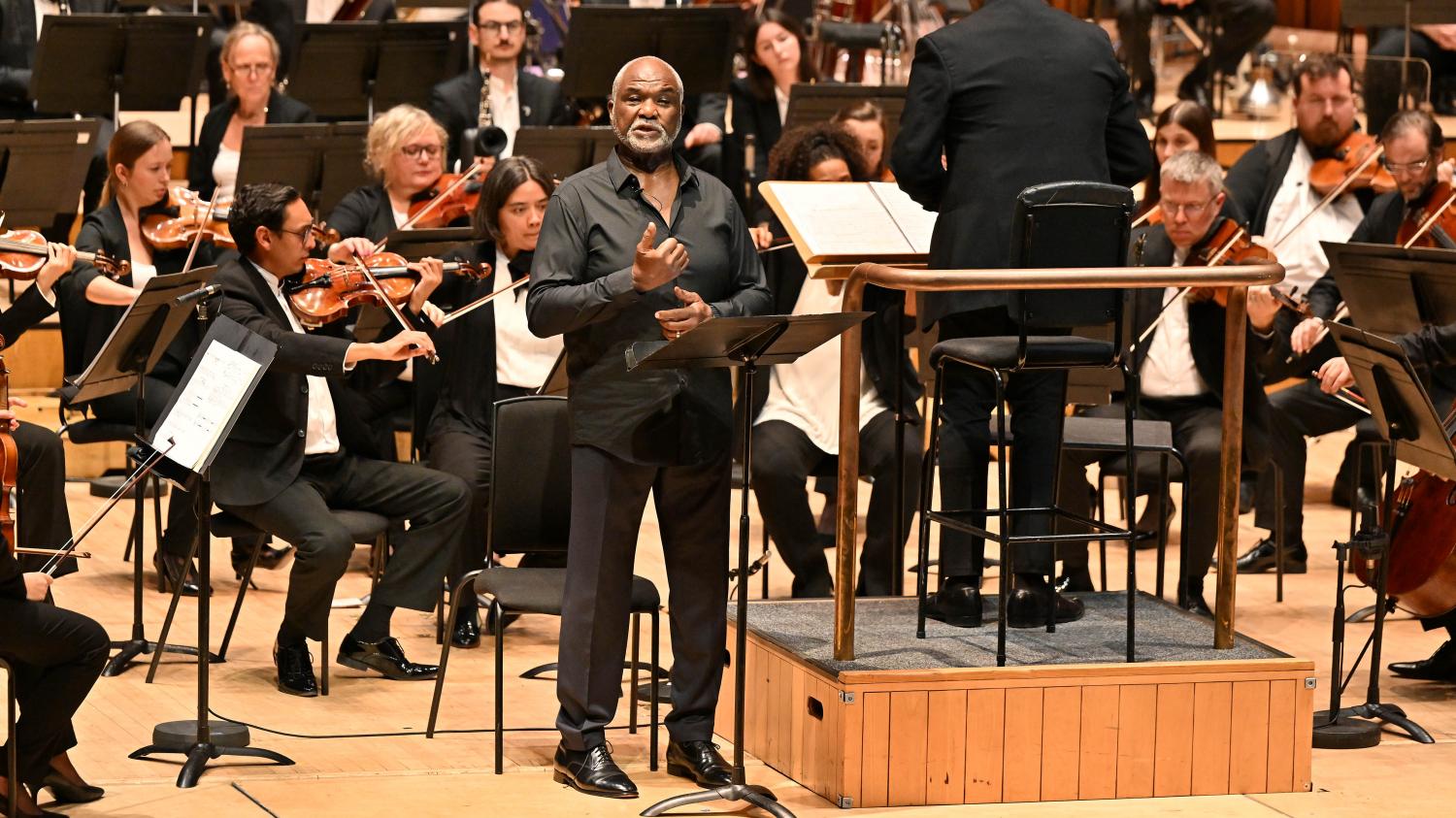
Wynton Marsalis’ Tuba Concerto (2021)
With his Tuba Concerto, Wynton Marsalis gives us a lively and jovial symphony of the South.
In its jazz moments, the tuba croons as if a big band soloist. Marshalis’ swing moments are equally satisfying, allowing the tuba to glide across its buttery lower register.
The concerto feels like two pieces overlayed, with the orchestra and tuba detached. Sat at the front of the stage, the tuba’s commanding call overpowers the orchestra at times. Unfortunately, the tuba is not as agile as a trumpet or a saxophone. The night’s tuba performance seems to trip and stumble through some of its run.
Though, I’d be remiss not to mention how technically difficult the piece is for tuba. This is over 25 minutes of quick fingers and sustained breaths. As if a bit of slapstick,
Ben Thomson as Principal Tuba begins his encore solo by emptying his spit valve. The resulting sputter underlines his stamina. Rightfully so, Thomson’s encore solo is met with a hollering round of applause.
In its poppy moments of radio-ready swing and jazz, Marsalis’ Tuba Concerto shows it’s potential. In these variations, the tuba emerges as an underdog hero of the orchestra.
Carlos Simon’s Portrait of a Queen (2017) and Amen! (2019)
Taken together, Simon’s Portrait of a Queen and Amen! presents a profound veneration of Black America’s difficult history, then raises the community up in praise and celebration.
As with Thompson, Simon creates a contrast between the serious and heavy against the joy and hope of the Black American experience. Esker’s narration in Portrait of Queen is striking. Her voice is textured and varied—from shouting to smiling. She paints a startling, confrontational, and beautiful portrait with her narration.
Simon’s movements are distinct. They powerfully move us through time— from slavery to Jim Crowe to modern day— but anchor us in the truth that’s always been — Black women are powerful.
Carlos’ pieces sound the most balanced of the evening. Carlos impressively maintains more traditional elements of a symphony, but stylises them with embellishments of West African drums, the reparation and rhythm of slave songs, and the full-bodied joy of church worship.
Some movements, particularly in Amen!, are noticeably lighter than the previous two. Perhaps because they were composed in 2017. While in 2017, the reality of structural racism was still all too real, there was lingering hope from Obama years, before the relentless heaviness of BLM from 2020 onwards.
Amen! comes alive. The program ends in joy and praise. The trombones provide smooth melodies that swoop through the concert hall, as if a velvety, soulful crooner. Simon’s written flourishes into the lower strings, with cello accents and running bass lines that
The evening finishes with a standing ovation from Simon Carlos himself, applauding the London Symphony Orchestra. The night is worth its standing ovation.
The night showcases the joy and importance of celebrating living composers. More important, yet, the night brings Black American voices to the concert hall with respect, dignity, and hope for more.
 London Show Cap
Leave a comment