Is there a more ubiquitous musical tradition than The Nutcracker at Christmastime? Tchaikovsky’s music twinkles alongside Christmas lights around the world. Many young dancers look forward to performing at its Christmas Party. Its musical motifs decorate adverts, movies, and social media all season.
But how do you pick which Nutcracker to buy a ticket to? London Tube stations are a gallery of Nutcracker posters. And it seems there are as many productions of The Nutcracker as there are American candy shops in London.
By far, The Nutcracker at the Royal Opera House is my pick. Peter Wright’s production captures the joy of experiencing Tchaikovsky’s brilliant ballet as a child, while still feeling adult and fully formed. It avoids childish tropes without compromising the magic of its story.
But before I get ahead of myself, let me count down my top 3 reasons why the Royal Ballet’s The Nutcracker is my favourite. It’s an advent calendar of a review, if you will.
3. Focus on the Dancing
At its core, The Nutcracker was written for dancing. And dance it does.
However, do not expect rich, decadent set pieces like an opera or a stage full of whimsical props like a pantomime. Instead, the set is made of a festive backdrop and borders with a few key props. Here the wide open floor is expertly filled by the Royal Ballet dancers, with space to leap, lift, and delight.
The dancing is technically brilliant. It is skilled and executed perfectly. The Royal Ballet has a high standard of dance, which The Nutcracker upholds.
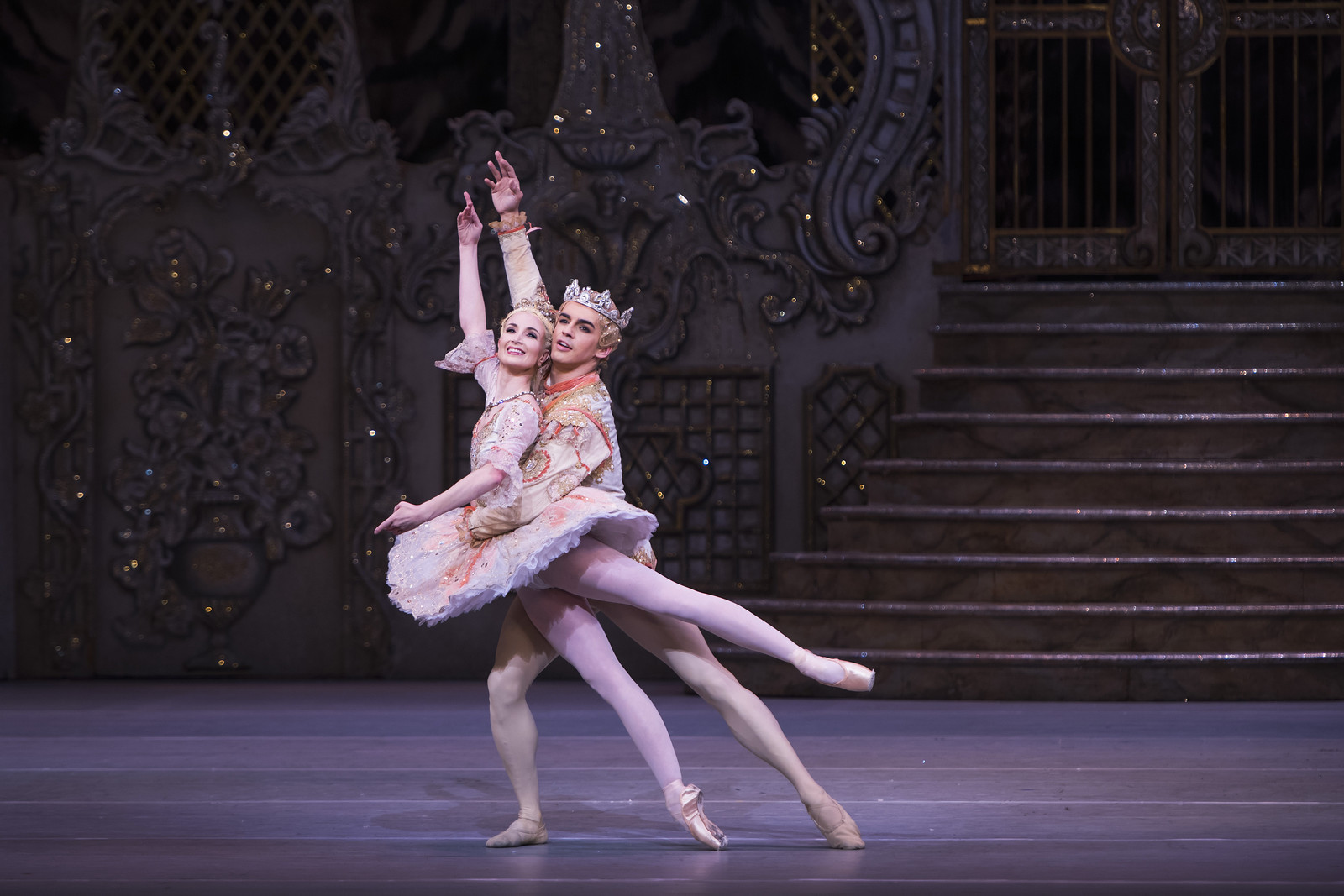
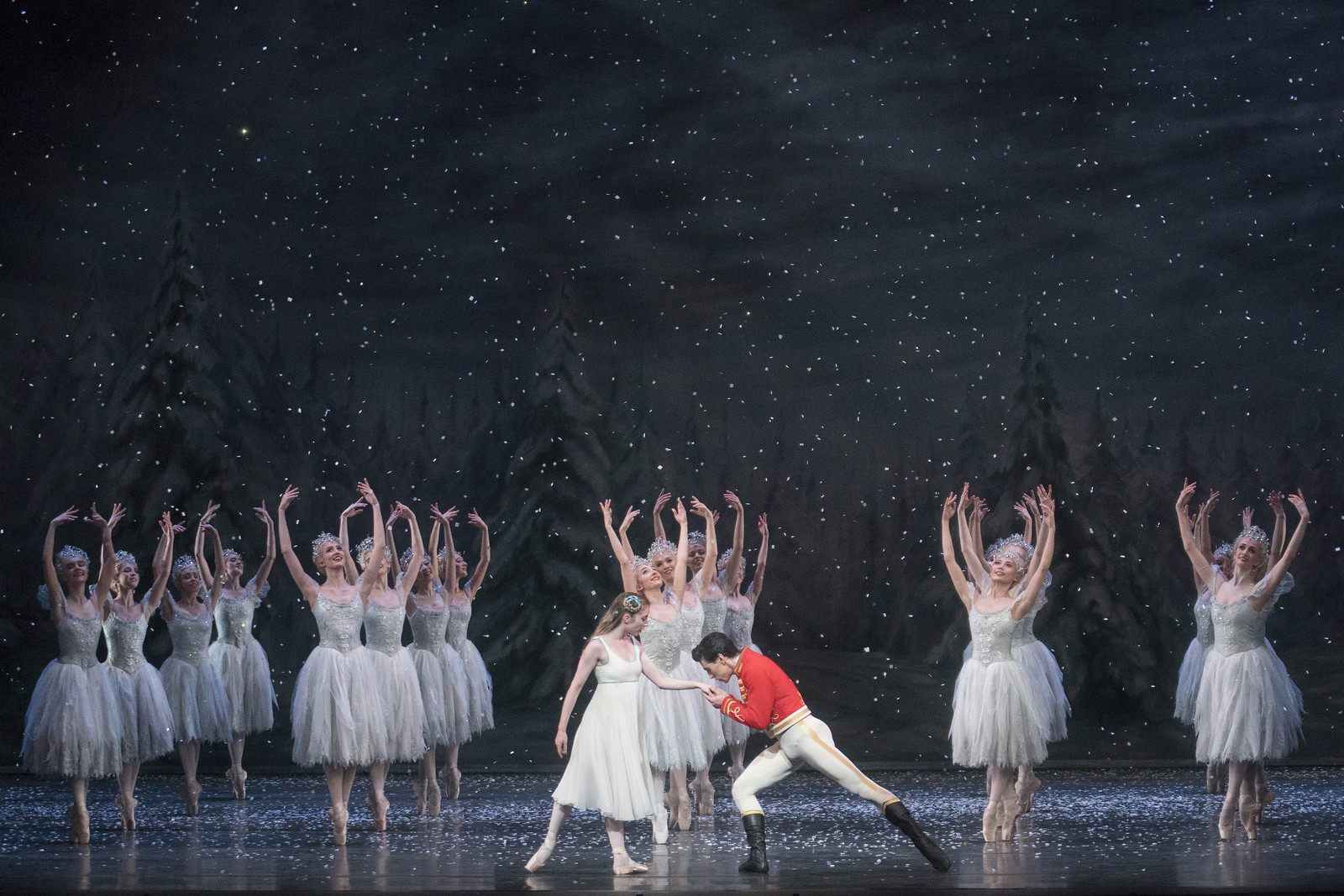
The choreography is equally brilliant. During the Waltz of Snowflakes, the dancers swirl and mark formations that recreate a snowstorm. During Act Two’s carousel of curio dances in the Kingdom of Sweets, pairs perform exquisite pas de deus and lifts that showcase their athleticism.
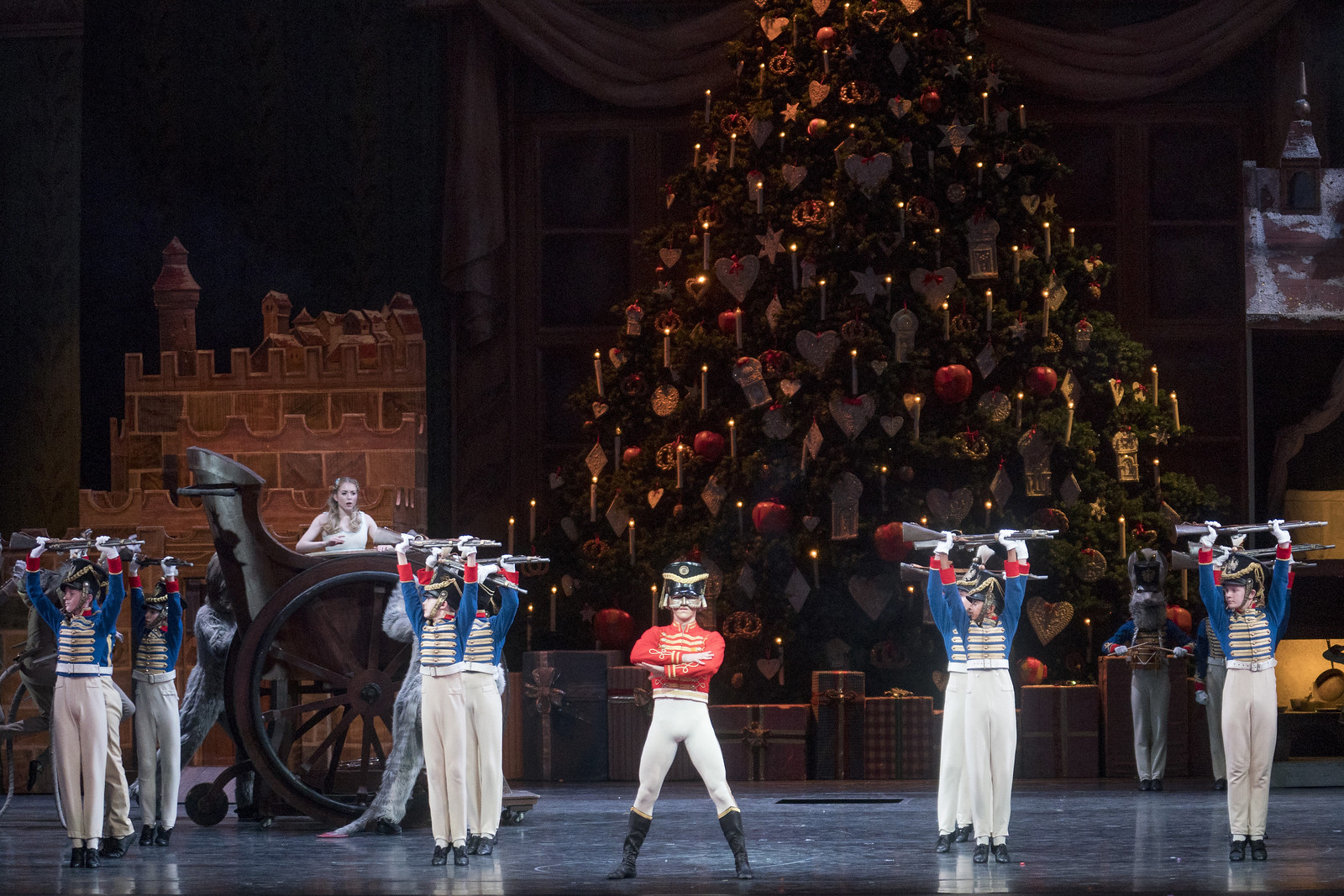
For me, the standout of the night is The Nutcracker’s pantomime recreating the fight with the rat king. In this scene, The Nutcracker, performed by Benjamin Ella the night I attended, recounts the drama of Act One to the Sugar Plum Fairy and the Prince. Despite performing onstage alone, The Nutcracker is captivating when blending the expressive technicality of his choreography alongside the didactic drama of miming. He tells a story without words, showing the power of dance.
It wouldn’t be The Nutcracker without the next generation of ballet students performing. Students from White Lodge in Richmond, the Royal Ballet School’s academy for younger students, bring hope to the future of ballet. After a few years of cancelled or scaled back performances due to Covid-19, it is a joy to see the young dancers on one of the most impressive stages in the world. For many students, this is their first year performing at the Royal Opera House. You can feel their joy.
2. Atmospherically between a German storybook (its setting) and Russian Romanticism (its creation)
Wright’s production atmospherically lands between its setting, a German storybook, and its creation, the Romantic movement in Russia.
The ballet is based on a much darker, German fairytale by E.T.A Hoffman titled “The Nutcracker and the Mouse King.” The dark, almost gothic nature of Hoffman’s story is dramatic enough for the stage. Though translated to a ballet, its levity is lifted, while maintaining its original setting in an upper-middle-class German family.
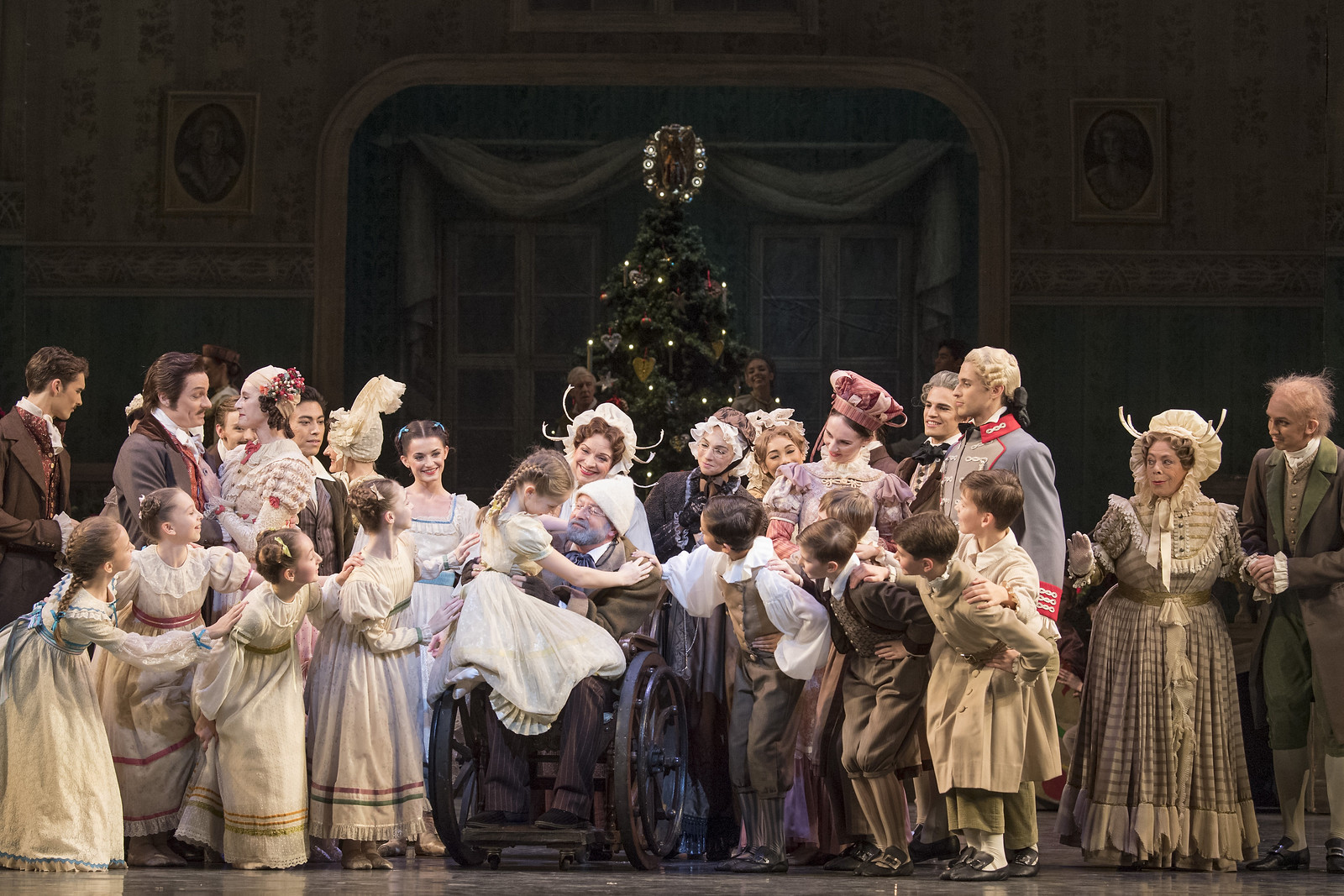
The Royal Ballet translates this world onstage in a wholesome, 19th century aesthetic that fits neatly into a storybook. The grandfather clock and the great German tradition of a Christmas tree feel familiar, but of its time. The costumes with the overcoats and buckles are charming. The set recreates German Rococo swirls and designs throughout the stage. It’s the world of German fairytales without the grim outlook.
This setting blends perfectly with the Russian Romanticism. Tchaikovsky defined the Romantic movement in Russia. While his other ballets, Sleeping Beauty and Swan Lake, may better capture this aesthetic, The Nutcracker still highlight’s its features. The music follows the emotional landscape of an individual on a journey through trial, fantasy, and dreams.
Taken together, it creates an atmosphere of timeless tradition. This is as close to a recreation of its premiere as you can get.
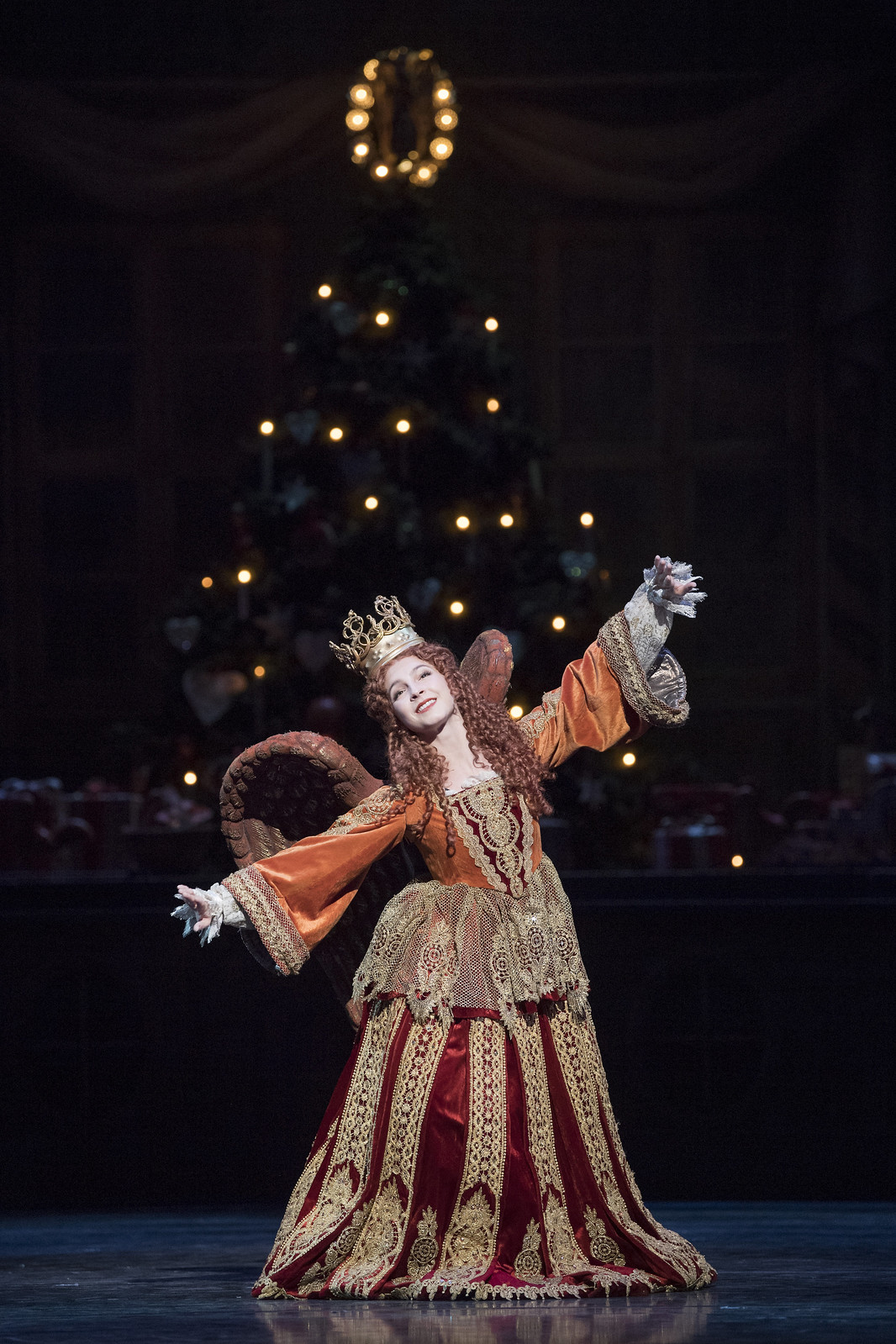
- A Minor Character Takes Centre Stage
In its first performances, audiences hated The Nutcracker. Theatre goers felt there was a disconnect between Act One—the Christmas Eve party— and Act Two—the Kingdom of Sweets. Even today, Act One is plot heavy and fast-paced. Act Two, meanwhile, is slower with seemingly no story.
The Royal Ballet had a big problem to solve trying to be faithful to a hated premiere.
*Cue Drosselmeyer.*
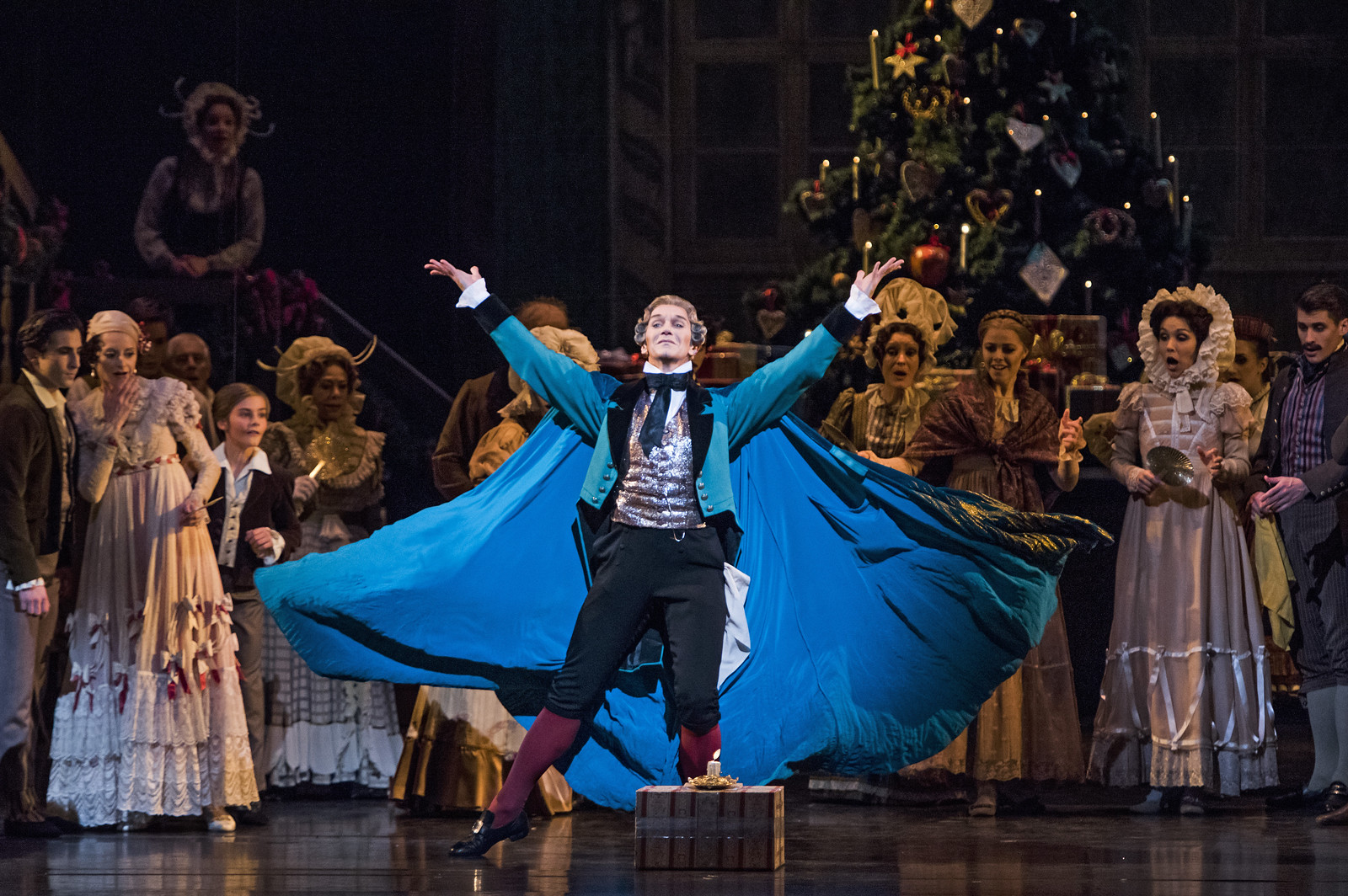
In many productions, Drosselmeyer is a minor character. At worst, he is a Councilman that appears simply to give Clara the fateful gift of the Nutcracker. At best, he is a magician that brings spectacle to the family Christmas Eve party.
In Wright’s production, Drosselmeyer is the golden thread that weaves Acts One and Two together.
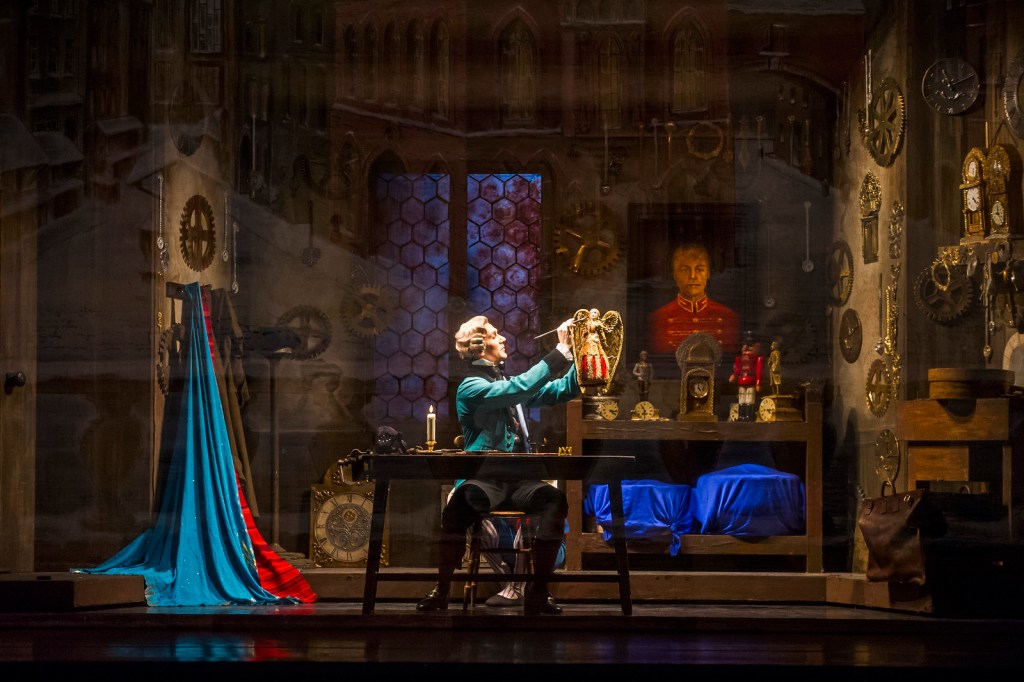
The production opens in Drosselmeyer’s workshop. We see him putting the finishing touches on the nutcracker as the overture trumpets fanfare. During the Christmas Eve party, Drosselmeyer pulls the strings as gifts unwrap and dancers dazzle the party guests.
But Drosselmeyer doesn’t exit stage right when Clara receives the Nutcracker. Instead, Drosselmeyer remains onstage as Clara and the Nutcracker hop on their sleigh into the Kingdom of Sweets.

Then, in Act Two, Drosselmeyer appears to keep the magic going by directing the showcase of delicious wanderlust dances of Act Two.
Besides providing wonderful choreography and miming, Drosselmeyer’s presence adds a layer of magic sprinkled like snow over the entire performance, almost as if he’s Father Christmas.
Have you seen the Royal Ballet’s Nutcracker? Did you feel the magic as well? Or, has another Nutcracker captivated you this Christmas? Let me know in the comments below.
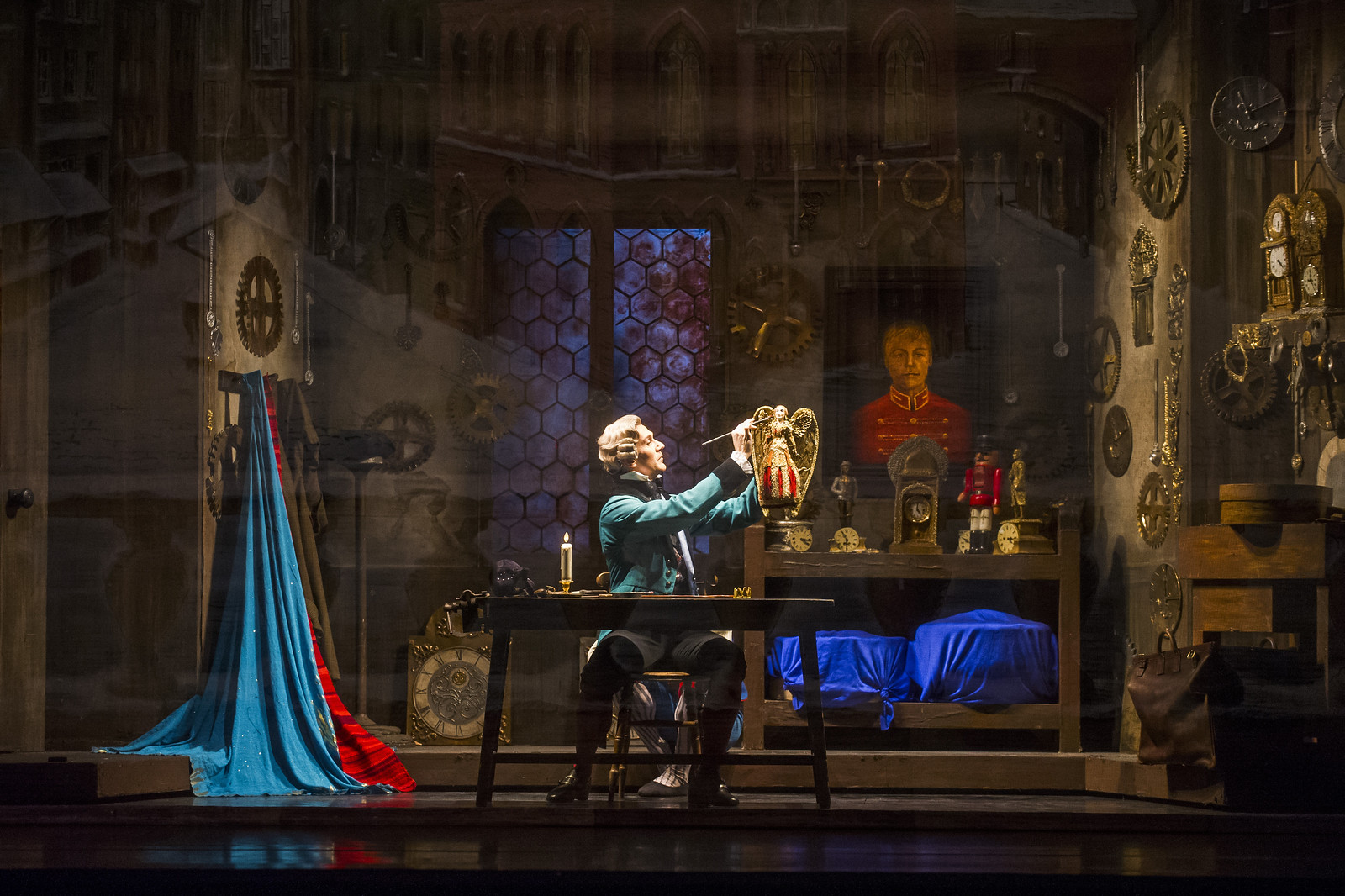
All images promotional materials from Royal Opera House. Promotional photos by Alastair Muir and Tristram Kenton.
 London Show Cap
Leave a comment