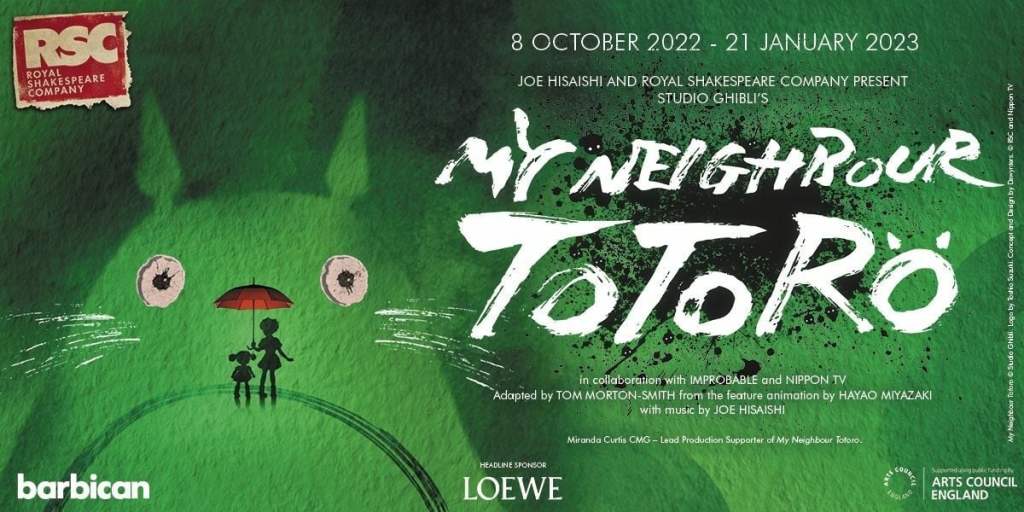
The audience gasped.
And then gasped again.
And another gasp.
As I watched Royal Shakespeare Company’s world premiere production of My Neighbour Totoro, the audience came to life around me, reacting, laughing, and smiling at this triumph on stage.
How did they do it?
Puppets.
Music.
Small details. — leaning into those little moments in life that make everyday magic.
Expectations were high walking into the Barbican Centre. The film that lends the stage show its name and story, My Neighbor Totoro, is frequently listed near the top of Best Films of All Time countdowns. The stage production opened to high praise. Tickets quickly sold out after a few key rave reviews, including a 5-star review from The Guardian.
And Totoro delivered.
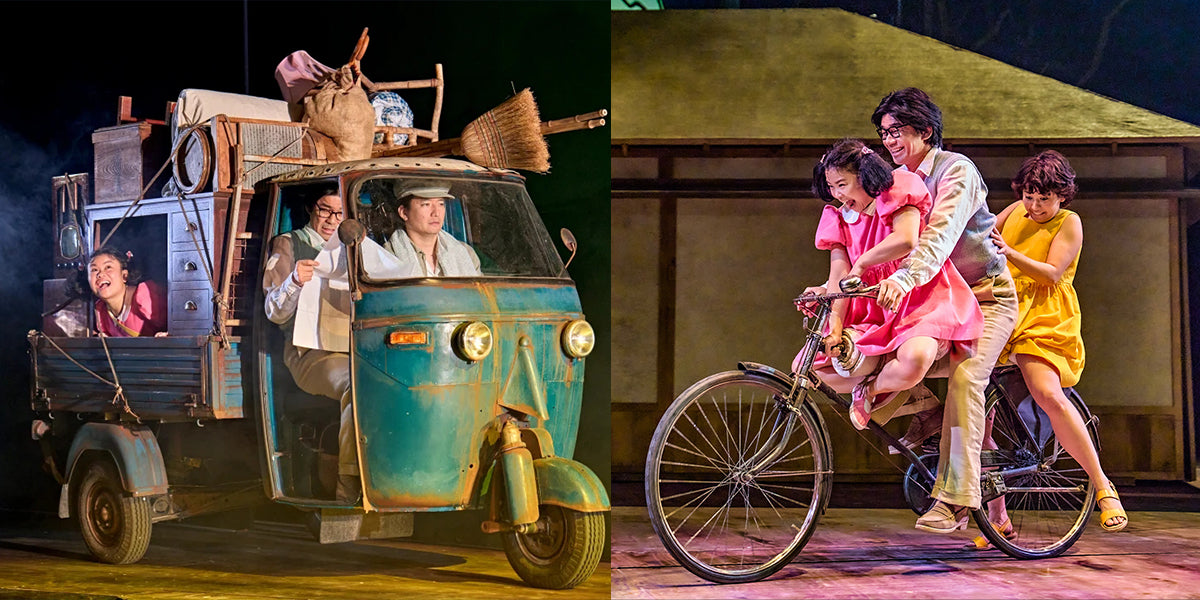
It’s a simple story at its core. The 1988 Studio Ghibli cult classic tells the story of two young sisters, Mei and Satsuki, who move from the big city to the Japanese countryside with their parents to revive their mother’s failing health. Set in the 1950s, it’s a romantic portrayal of Japan, its culture, its spirituality, and its people. The show’s larger themes balance the heaviness of human fragility and the hopefulness and joy of a child’s mind. In this range, somewhere between the weightlessness of hope and the depth of fear, Totoro strikes a resonant emotional chord.
Totoro is an atmospheric piece of theatre. The story itself is quite light on plot. Think about it—how do you remember the film? Ask someone else what they remember of the film. What you’ll find is most people remember moments and feelings.
Theatre creates moments like no other art form. Totoro is a buffet of delicious moments with all the right ingredients.
Which leads us to the puppets. If you can believe we are this far into the review without mentioning the puppets!
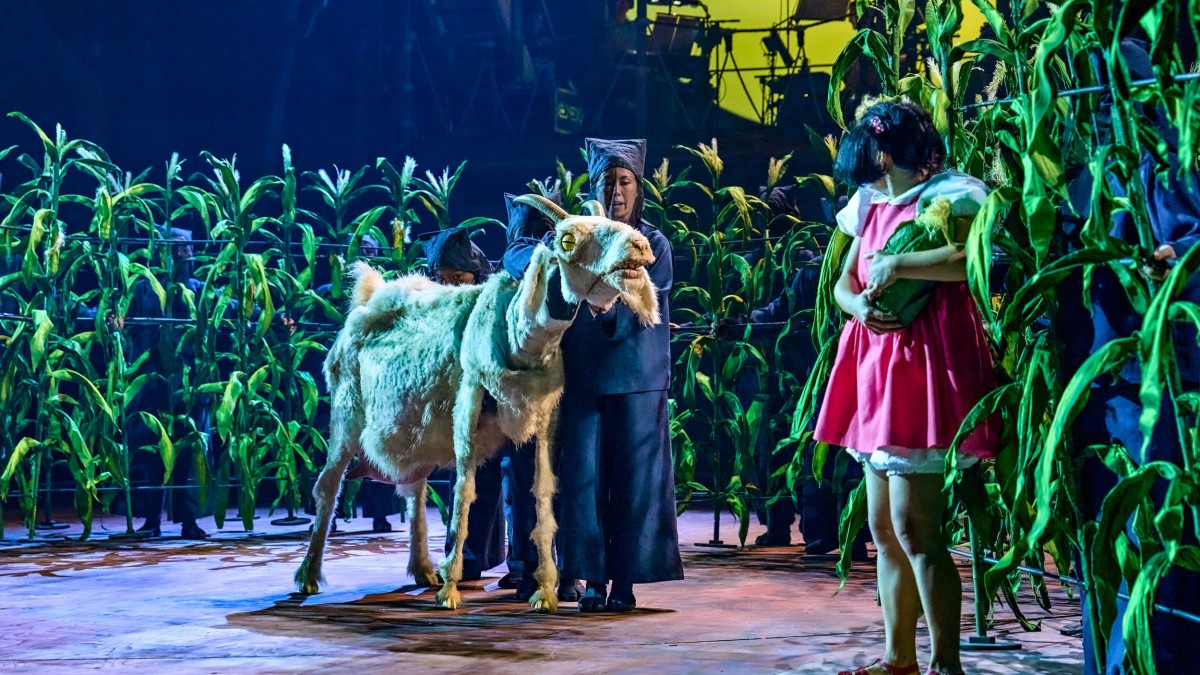
The puppets are extraordinary. The spirits and the creatures of the 2D anime roar into life in 3D, dynamic figures that quite literally fill the entire stage.
And that’s when the audience began to gasp.
When Mei and her sister Satsuki, arriving in the village for the first time, they discover creatures while exploring their new house. Gasp.
When Mei is playing in the garden and encounters her first little spirits. The room breathes in collectively then giggles.
When Totoro first appears on stage… this is the moment…you can hear audible delight, ‘wow’s dance around the auditorium.
And my personal favourite and perhaps one of the most iconic moments from the film…
When the cat bus arrives at the bus stop.
(No spoilers. I won’t describe the puppets in too much detail, but they need to be seen to be believed.)
It’s these moments of childhood imagination brought to life almost impossibly that make Totoro dazzle.
These puppets are colourful, they’re intricate, and they’re enchanting—I can’t look away. I want to watch them move, study their features, and invite them in.
They’re also larger than life. Improbable, the creative company that crafted and gave life to these puppets, built the characters of Totoro in the legendary workshop of Jim Henson, of Muppet fame, in LA. I first saw Improbable’s work in English National Opera’s production of Satyagraha last year. The consistency and quality of Improbable’s work is unparalleled. In my Jennifer Coolidge voice, “Those are some high-end puppets.”
But even though these puppets are creatures from a spiritual world, they never feel like monsters. They feel safe. This is partially achieved by expert puppeteers onstage, dressed all in black, making the puppets dance with levers and strings. It’s a peek behind the curtain that, paradoxically, adds another layer of magic. If you’re lucky enough to attend, stay tuned for a bit of cheeky humour from the puppeteers themselves throughout the evening.
For me, the final wave of a wand that pulls off the magic trick is Joe Hisaishi’s music.
Joe Hisaishi is the John Williams or the Alan Menken of anime. (I will spare you my passionate soapbox about how Joe Hisaishi’s score to Howl’s Moving Castle may be one of the most beautiful film scores ever written.)
In fact, it was Joe Hisaishi himself who brought Totoro to stage. Dreaming for years and years to bring a Studio Ghibli film to the stage, Hisaishi was looking for the right collaborator. Of all the internationally acclaimed films in Ghibli’s catalogue, Hisaishi wanted Totoro specifically. Finally, Hisaishi decided to collaborate with the Royal Shakespeare Company, working hands-on over years to perfect and polish this existing masterpiece. It should be no surprise then that, with composer as executive producer, the music is a central figure in the show.
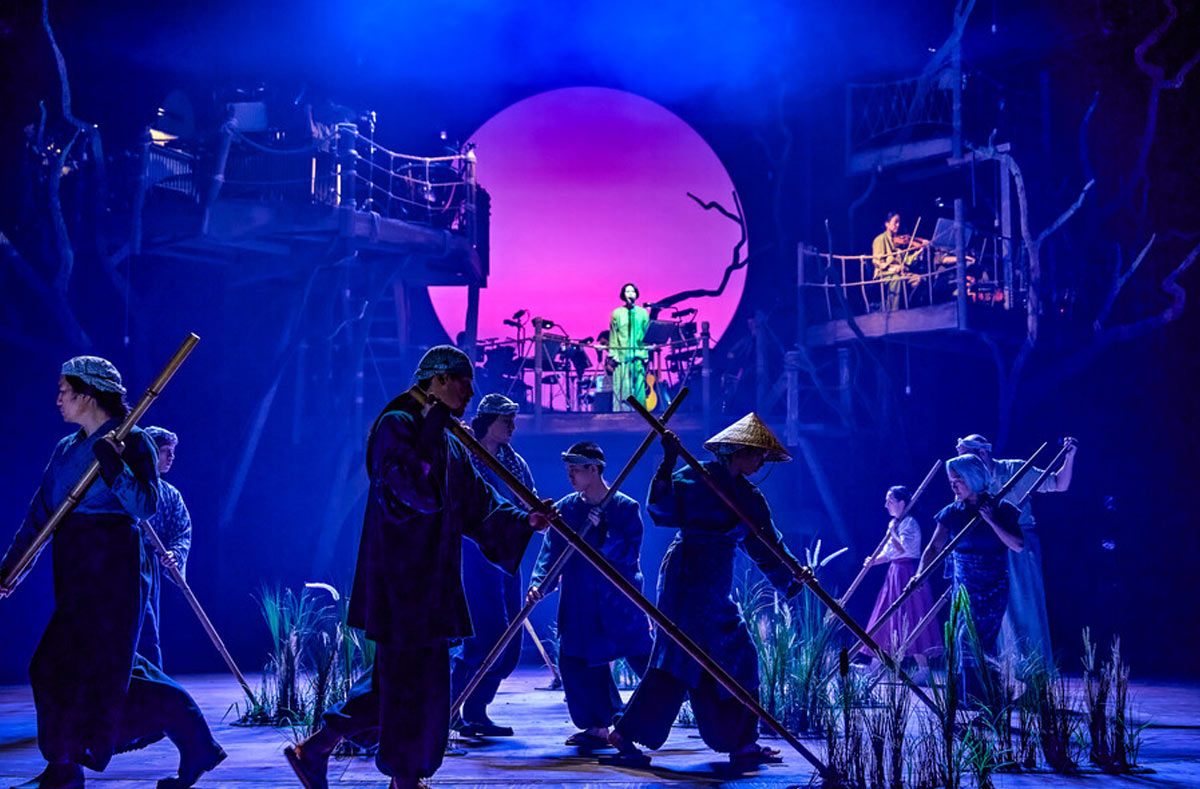
A light hearted orchestra soundtracks the entire performance from onstage. They perform from floating platforms, draped in the trees, the bird nests, and the moon, almost embedded in the set upstage.
Hisaishi’s music itself is gorgeous. It’s at times joyful and playful and other times strained and yearning. Though the score for Totoro is inked with a deep heartfelt and soulful undercurrent. The music, without us noticing, easily guides the hopefulness of the story from our eyes to our hearts.
The Totoro Ending Theme is endlessly singable. What a way to exit the theatre! The curtain raises again as the live band sings out those 3 staccato notes— To-to-ro-To-to-ro — as they dance between the audience singing along (and sometimes dancing) with the house lights up.
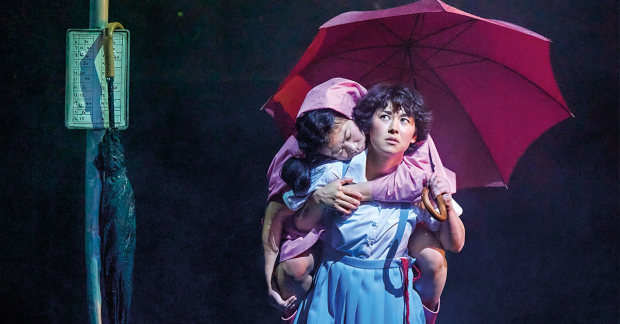
This show needs to be seen. It’s sold-out run at The Barbican is a testament to its success. We can only hope for a UK tour, a West End transfer, or even a Broadway run.
My Neighbour Totoro is the most incredible piece of theatre I saw in 2022. And I wish you the opportunity to experience it as well.
Totoro is a hit.
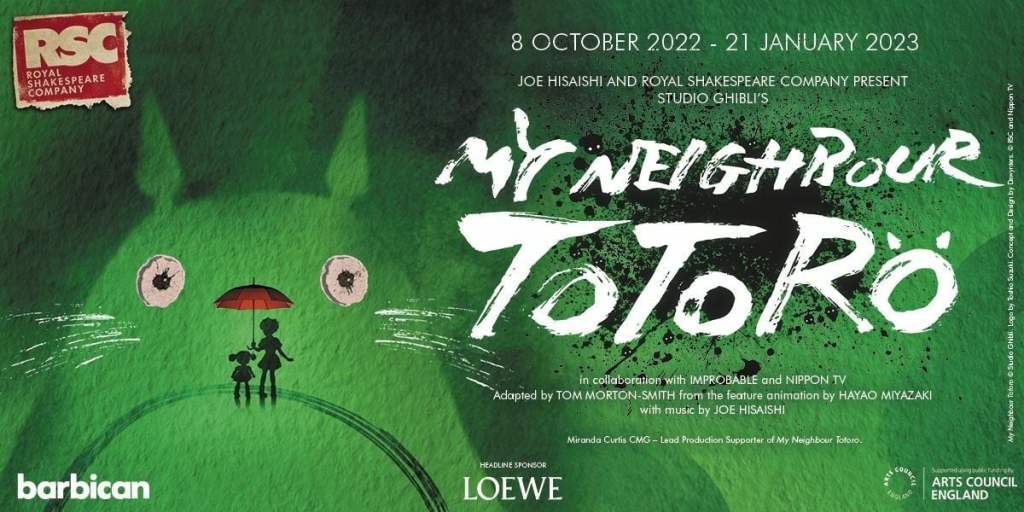
All images are promotional photos from Royal Shakespeare Company and the Barbican Centre, by Manuel Harlan.
 London Show Cap
Leave a comment