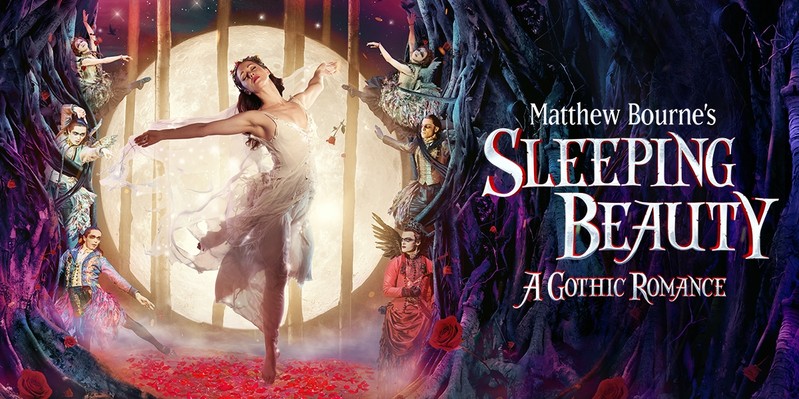
Matthew Bourne is a household name, even to those outside the dance community. He is often hailed as one of the UK’s most famous choreographers. And, indeed, he has had a number of key successes that have influenced the world of dance—namely a reimagining of Swan Lake as a gay romance.
So what went wrong? Why did I dislike Bourne’s take on Sleeping Beauty? It’s one of the most famous ballets in the world and it’s certainly a masterwork of Tchaikovsky’s. But did Bourne stray too far from the original text?
Bourne’s mega-successful reimagining of Sleeping Beauty returned to Sadler’s Wells to celebrate its 10th anniversary this year. But would it have been best to let this one rest?
The show bills itself as a “gothic romance,” though it is neither gothic nor romantic. Instead it reaches for modern relevance, but the tone already feels dated. It’s still under the spell of the zeitgeist from 10 years ago. It is neither comedy nor tragedy. And with all the missed steps and botched timing, it doesn’t even dance to the beat of its own drum.

At best, Bourne’s Beauty mixes metaphors. It’s in-cohesive and startling. It mistakes shocking reveals with meaningful plot.
Sitting in one of the world’s most famous dance theatres, Sadler’s Wells, I spent the entire performance struggling to figure out this show’s identity.
Is it a panto?
The curtain rose to a promising start. The wicked fairy, Carabosse (or Maleficent in Disney speak), performing a menacing shadow dance, foreshadowing their power play against baby Aurora.
But then..a puppet.
A tiny baby bursts through the curtains, its limbs flailing as it bounces up and down. A few stifled laughs ripple through the audience. Then, as the puppet baby awkward crawls across the stage, the audience leans comfortably in on the joke.
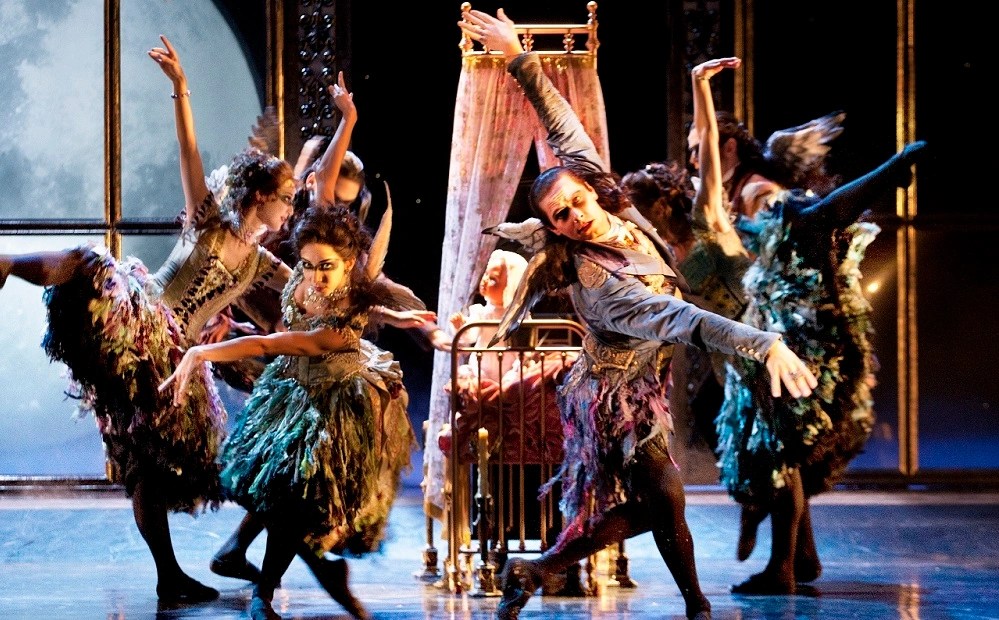
The physical comedy continues. As dancers emerge, minor characters distract with gimmicks.
The audience is laughing, but these are cheap laughs.
After a sleeping spell that last 100 years, we return for Act Two in present day. This would be a clever wink and a nudge had the performers not over-egged the pudding with overly obvious cell phone usage and a few too many selfies. The cell phone shtick continued long after the chuckles subsided.
In battle scenes I use all my self control to resist shouting “he’s behind you!”
I can’t help but wonder, is this a panto?
Is it even a ballet?
Given Sleeping Beauty is one of the world’s most famous ballets and the casting boasts top billing for ballet dancers, it’s reasonable to expect a ballet.
Instead, Bourne’s Beauty is a long-form contemporary dance piece with occasional ballet poses. This seems to be the expressed intention: “contemporary dance theatre.” However, the execution misses the mark. Group numbers are not synchronised. Counts are missed. The dancers seemingly lurch between dance styles desperately searching for a sequence that works.
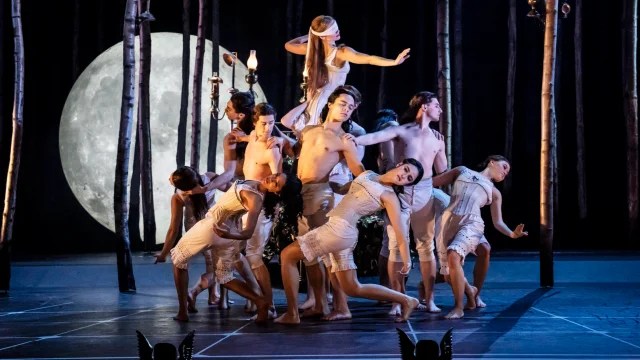
Fortunately, there are some beautiful ballet sequences, courtesy of Aurora, on this night performed by Katrina Lyndon. At the beginning of the second act, two fairies attempt to awaken Aurora, who is under a sleeping spell. The following pas de trois is elegant and delicate. Aurora nearly lifts herself to match the fairies’ steps, though falls into their arms without completing a melody. Aurora’s falls are graceful. The fairies, catching Aurora, swoop her into a lift, sometimes a pose, but always creating a silhouette of the young, lively Aurora before the spell.
These stunning ballet sequences are the saving grace of a performance full of some sloppy and inefficient dances.
The emotional high point of the first act is the famous Roses Waltz, you know, the one whose melody lends itself to “Once Upon a Dream,” from Disney’s 1959 animated Sleeping Beauty. What begins as a waltz turns into a jazz sequence that has been cross-pollinated with contemporary.
Unforgivably, the counts are off. The waltz is one of the simplest rhythms in dance. A waltz repeats even bars of 3 counts. 1-2-3, 1-2-3. Watching the Roses Waltz, it appears there were more than 3 counts in this waltz. Perhaps the introduction of jazz inspired improvisation. However, as a group number, this rose garden wilted.
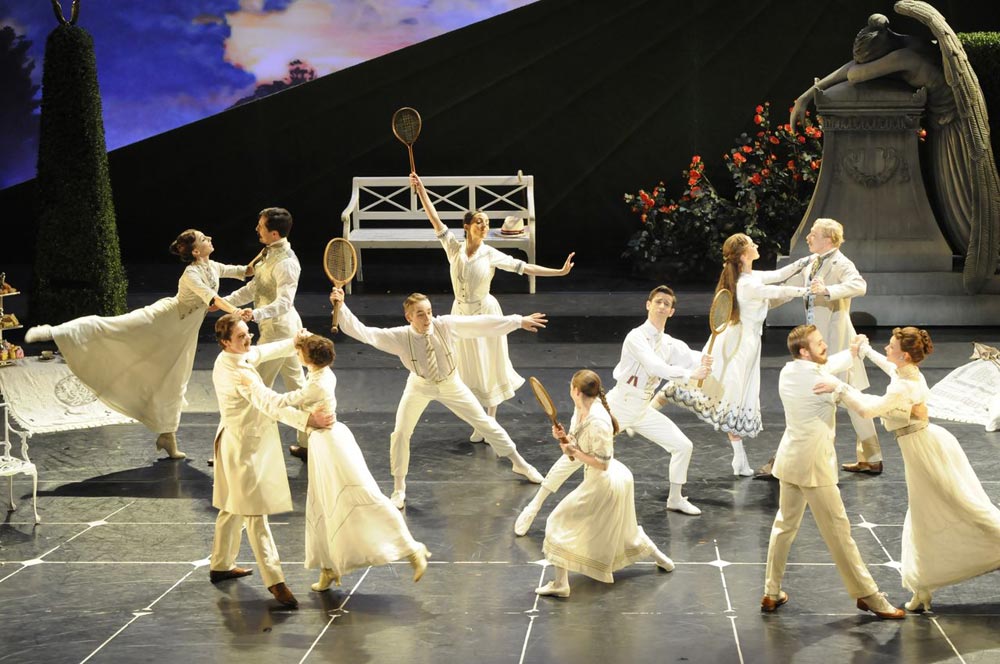
Is it even Sleeping Beauty?
This is a shock factor Sleeping Beauty.
At times the story is hanging on to the original synopsis by the skin of its teeth (no spoilers, only veiled references). These plot twists create effective audience reactions, but fail to coalesce into a cohesive plot. Perhaps I should have had another glass of wine before the performance.
To be fair, it all starts out fine. The prologue is dense. Before the end of the overture, Aurora’s parents must plead with Carabosse for a child, give birth to Aurora, welcome the child to court, and receive the curse from Carabosse.
While most ballets require pre-reading to understand the action on stage, this production cleverly projects the synopsis onto the curtains during the prologue and the overture.
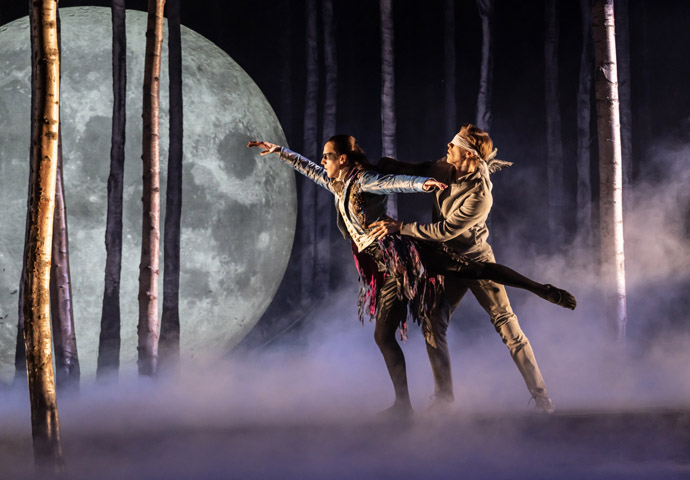
The most noticeable change sees traditionally female characters performed by men. Caraboose is replaced by her son after the prologue and the Lilac Fairy become the Lilac Count. Bourne’s company is on-brand as a male-forward cast. These are overall welcome changes, but largely emphasise existing concerns about the male gaze.
Unfortunately, this reimagining fails to address a glaring concern in the original story—female agency. Despite a surprise middle point for Aurora and a slightly-altered ending, Aurora’s fate is at the will of her male counterparts. The maleness of decision making is reinforced in a plot twist by Carabosse’s son just before the climax in Act Two.
With the same beginning and largely the same end, is it worth all that fuss for a few plot twists?
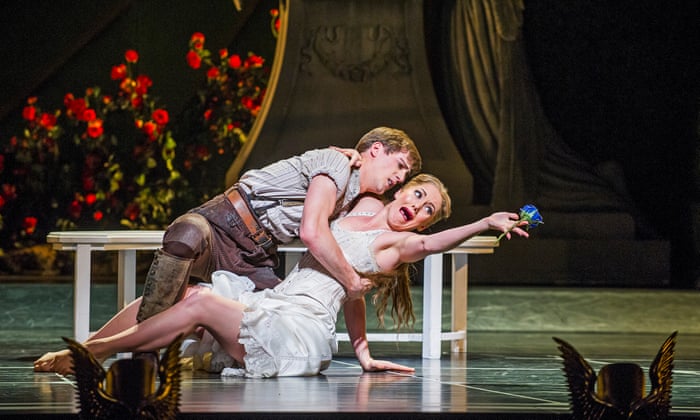
Is it even any good?
Leaving the theatre, some audience members were chatting positively. Often these audience members were discussing specific moments or key visuals rather than the work as a whole.
The show has clearly engaged a younger audience. It has also clearly been very successful. I support all enthusiasm for dance. So if this is for you, turn the music up. And if it’s not, we are blessed with a forthcoming production of Sleeping Beauty from the Royal Ballet.
Just as Aurora must be asking herself at the end of the story, was it worth it to reawaken Sleeping Beauty after all these years? Perhaps Matthew Bourne’s Sleeping Beauty should have stayed in bed.
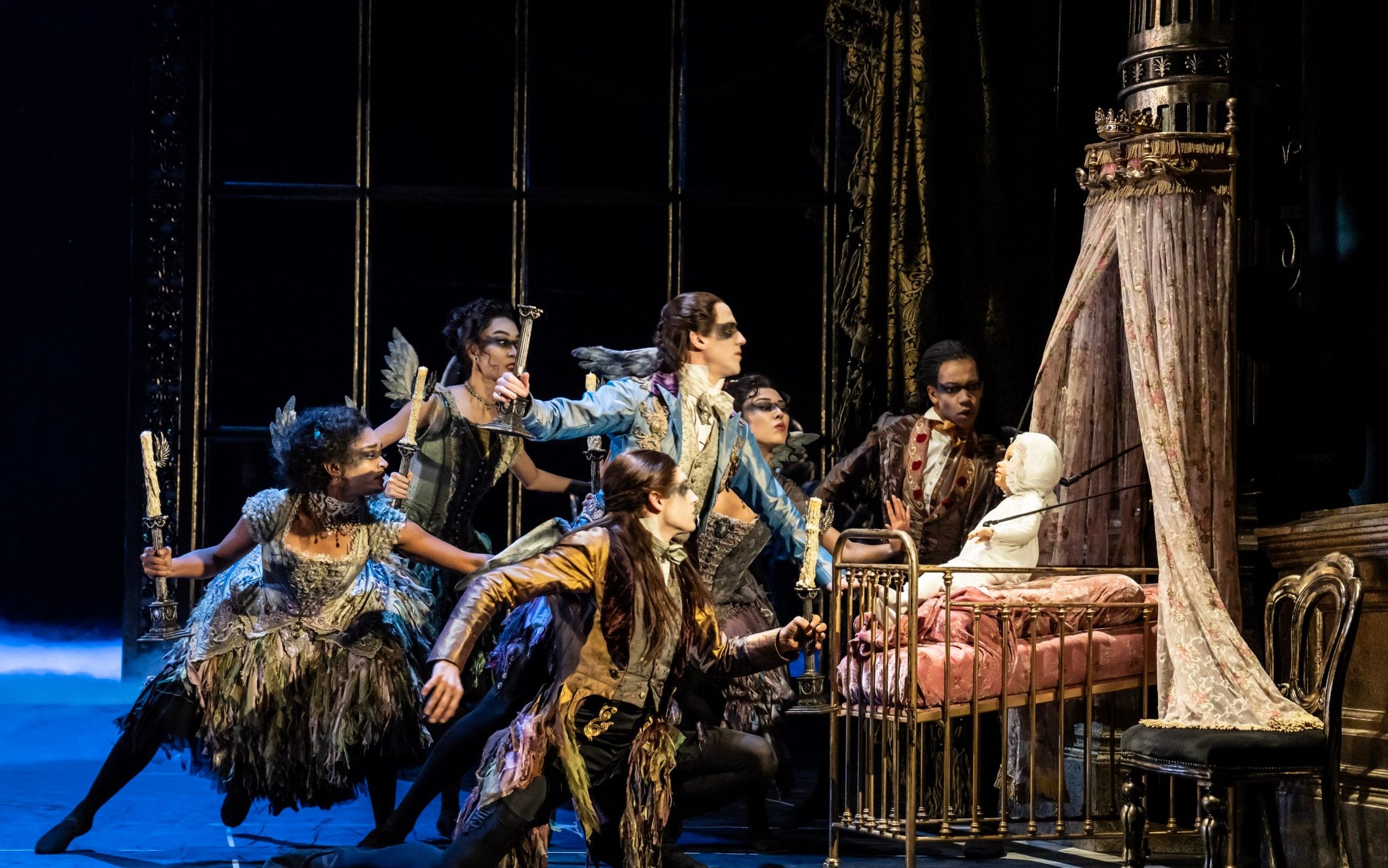
All images are promotional photos from Matthew Bourne’s New Adventures and Sadler’s Wells.
 London Show Cap
Leave a comment